
Plant It and They Will Come
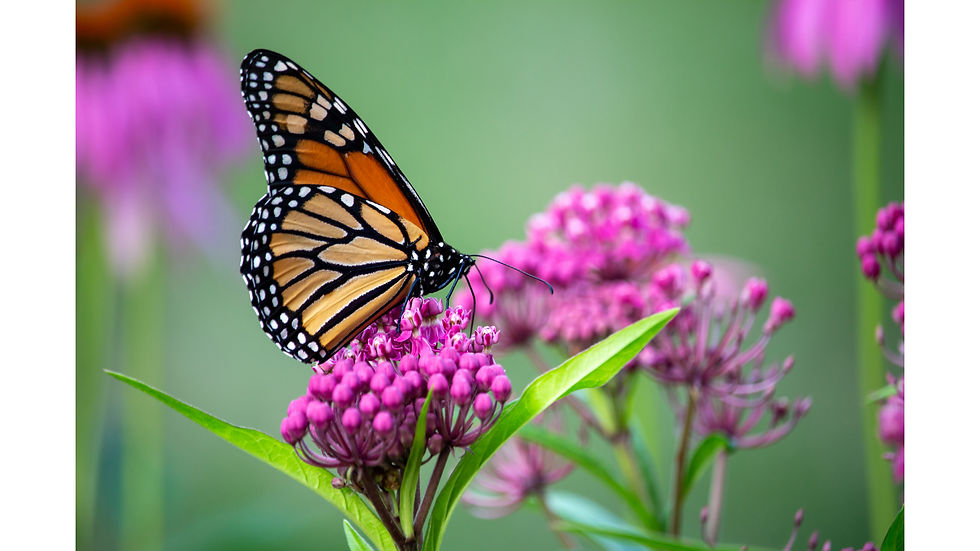
You don’t need a meadow to make your property useful to pollinators. Even a small patch of native plants can provide food and habitat for bees, butterflies, moths and other insects.
The key is to offer more than one kind of flower. Bee balm, coneflower, black-eyed Susan, mountain mint and native phlox provide nectar during the warmer months, while goldenrod and asters offer valuable food later in the season. Native shrubs and trees, including blueberries, willows and serviceberries, can provide another abundant source of flowers.
But feeding adult pollinators is only part of the story. Many butterflies need particular plants on which to raise their young. Female monarchs lay their eggs on milkweed, and when the caterpillars hatch, milkweed is the only kind of plant they can eat. Black swallowtail caterpillars use plants in the carrot family, including parsley and dill. Oaks support the caterpillars of hundreds of species of moths and butterflies, making a single tree surprisingly valuable to the surrounding ecosystem.
A slightly less tidy yard helps, too. Some native bees nest in bare ground or hollow stems, while other insects spend the winter among fallen leaves and plant debris. Leaving some stems standing and some leaves in place gives them somewhere to shelter.
You don’t have to give up your lawn. Replacing even part of it with native flowers, shrubs and trees, avoiding insecticides, and providing plants that bloom from spring through fall can turn an ordinary yard into a place where pollinators can feed, reproduce and survive.
ADVERTISEMENTS

Monarch Butterfly with Flowers Plate
8.9 or 11 inches

Attract Monarch Butterflies with Seed Needs
Milkweed Seed Packet Collection

FACTS YOU MIGHT BE INTERESTED IN

HISTORY & INNOVATIONS
Why Were Babies Found in Cabbage Patches?

HISTORY & INNOVATIONS
How Storks Got Into the Baby Business

SCIENCE & NATURE
In New Mexico, Pluto is Still a Planet

FOOD & DRINK
How the Aztecs Turned a Tiny Berry Into a Tomato

SCIENCE & NATURE
Sheep Used to Shed on Their Own. We Bred That Out of Them

PEOPLE
How Will the Next Dalai Lama Be Chosen?
ADVERTISEMENT

POPULAR NOW

HISTORY & INNOVATIONS
The Snowmen of 1511 Were Not for Children

FOOD & DRINK
Why is an Eggplant called an Eggplant

People
She Married a Great Composer. Then Things Got Complicated.

FOOD & DRINK
Why Do We Call It "Hair of the Dog"?

PEOPLE
A 1677 Marriage Helped Create One of Britain’s Great Fortunes

SCIENCE & NATURE
The Hidden Superpower of Brass
ADVERTISEMENT