
The World’s Richest Company Had Its Own Army
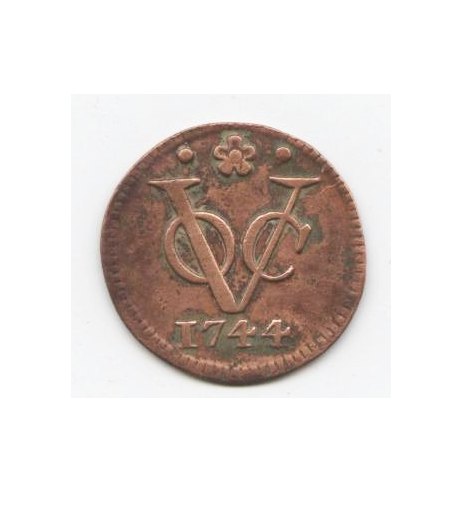
Founded in 1602, the Dutch East India Company, known as the VOC, became one of the most powerful corporations in history.
The initials stood for Vereenigde Oostindische Compagnie, or “United East India Company.”
But the VOC was far more than a trading company.
It could wage war, build forts, command private armies, sign treaties, govern overseas territories, and issue publicly traded stock.
Historians often describe it as the world’s first true multinational corporation.
At its peak during the Dutch Golden Age, Dutch ships and trading posts stretched from Indonesia and South Africa to the Caribbean and North America.
New York City itself began as the Dutch settlement of New Amsterdam.
The company became extraordinarily wealthy through global trade, especially spices such as nutmeg, cloves, and mace, which were once so valuable that European powers fought wars over them.
In one of history’s most remarkable trade-offs, the Dutch ultimately gave up Manhattan to the English while strengthening control over tiny Run Island in present-day Indonesia, one of the world’s few nutmeg-producing regions at the time.
Some economists estimate the VOC’s peak market value would equal roughly $7 to $8 trillion today relative to the size of the global economy, potentially making it more valuable than modern giants such as Apple, Microsoft, or Saudi Aramco.
Yet despite its immense wealth and power, the VOC eventually collapsed.
By the late 1700s, the company was struggling with corruption, soaring debt, military overreach, bureaucracy, and increasing global competition. Maintaining distant forts, fleets, armies, and colonies became enormously expensive.
Executives and company officials often profited through private trading schemes, bribery, and corruption, while messages traveling between Europe and Asia could take many months to arrive, slowing decisions and making the vast empire increasingly difficult to manage efficiently.
At the same time, England’s growing naval and commercial power began to overtake Dutch dominance in global trade.
The company was formally dissolved in 1799.
Many of the problems that contributed to the VOC’s collapse still affect large organizations today: excessive debt, bloated management structures, corruption scandals, costly expansion, shareholder pressure, and the challenge of managing sprawling global operations.
In many ways, it looked surprisingly modern, just with cannons attached to the balance sheet.
ADVERTISEMENTS

Apple AirPods Pro 3 Wireless Earbuds, Active Noise Cancellation, Live Translation, Heart Rate Sensing,
Hearing Aid Feature, Bluetooth Headphones, Spatial Audio, High-Fidelity Sound, USB-C Charging

Duncan & Stone Travel Journals
Elegant Journaling Notebook

FACTS YOU MIGHT BE INTERESTED IN

SCIENCE NATURE
How a Mother’s Bones Help Build Her Baby’s
_edited_edited_edited.jpg)
HISTORY & INNOVATIONS
How Medieval Builders Lifted Stone Into the Sky

HISTORY & INNOVATIONS
Why Were Babies Found in Cabbage Patches?

HISTORY & INNOVATIONS
How Storks Got Into the Baby Business

SCIENCE & NATURE
In New Mexico, Pluto is Still a Planet

HISTORY & INNOVATIONS
The World's Strangest Perfume Ingredient
ADVERTISEMENT

POPULAR NOW
_(contrast)_edited.png)
HISTORY & INNOVATION
The Ancient Origins of Plastic Surgery

FOOD & DRINK
Why is an Eggplant called an Eggplant

FOOD & DRINK
Why Do We Call It "Hair of the Dog"?

SCIENCE & NATURE
The Hidden Superpower of Brass

SCIENCE & NATURE
Why Toddlers Have More Brain Connections Than Adults

SCIENCE & NATURE
Your Eyes Have a Night Shift
ADVERTISEMENT