
Why Millions of Chinese Men Once Wore a Single Long Braid
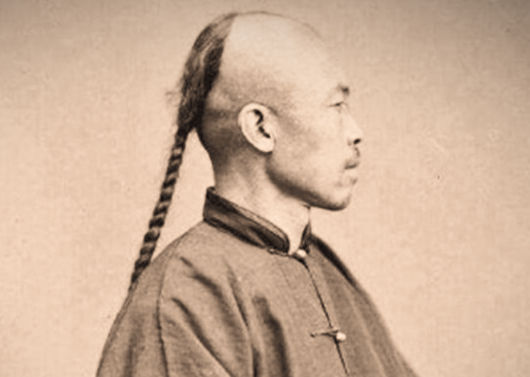
For centuries, many Chinese men wore a hairstyle known as the “queue”: the front of the head was shaved, while the remaining hair was grown long and braided down the back. Today it is often seen as a traditional symbol of old China, but the hairstyle was actually imposed after the Manchu conquest of China in the 1600s.
When the Manchus established the Qing dynasty in 1644, they ordered Han Chinese men to adopt the Manchu hairstyle as a sign of loyalty to the new ruling dynasty. Refusing could be treated as rebellion. The policy became known through a harsh warning often summarized as: “Keep your hair and lose your head, or cut your hair and keep your head.”
The style itself had practical roots among the Manchus, who came from northeastern Asia and had strong military and horseback-riding traditions. The shaved front helped with helmets and heat, while the long braid preserved part of the hair according to their customs.
For many Han Chinese, the order was deeply offensive. Confucian tradition taught that the body, including the hair, was inherited from one’s parents and should not be altered unnecessarily. Cutting the hair was seen by many as a sign of submission to foreign rule.
Over time, however, the queue became a normal part of everyday life across China. By the late 1800s, many outsiders mistakenly assumed it had always been an ancient Chinese tradition.After the Qing dynasty collapsed in 1911, the queue disappeared surprisingly quickly. Cutting off the braid became a public symbol of political change and modernization. In some cities, men gathered in barber shops to remove queues that had been required for nearly 270 years.
ADVERTISEMENTS

Compact Binoculars for Adults & Kids
Great for Bird Watching, Concerts & Theater

NASA Lunar Telescope for Kids
90x Magnification, includes Two Eyepieces

FACTS YOU MIGHT BE INTERESTED IN

SCIENCE NATURE
How a Mother’s Bones Help Build Her Baby’s
_edited_edited_edited.jpg)
HISTORY & INNOVATIONS
How Medieval Builders Lifted Stone Into the Sky

HISTORY & INNOVATIONS
Why Were Babies Found in Cabbage Patches?

HISTORY & INNOVATIONS
How Storks Got Into the Baby Business

SCIENCE & NATURE
In New Mexico, Pluto is Still a Planet

HISTORY & INNOVATIONS
The World's Strangest Perfume Ingredient
ADVERTISEMENT

POPULAR NOW
_(contrast)_edited.png)
HISTORY & INNOVATION
The Ancient Origins of Plastic Surgery
SCIENCE & NATURE
What Does a Gila Monster Have to Do With GLP-1 Weight Loss Drugs?

FOOD & DRINK
Why is an Eggplant called an Eggplant

FOOD & DRINK
Why Do We Call It "Hair of the Dog"?

SCIENCE & NATURE
The Hidden Superpower of Brass

SCIENCE & NATURE
Why Toddlers Have More Brain Connections Than Adults
ADVERTISEMENT